


Home made consumer protection
By Value hunter on Jan 10, 2011 | In In real life, Wondering, Money chat, Common sense, Frugal wars | Send feedback »
I have been kicking around an idea for a while now, so I thought I would share it with you, regarding protecting myself and my family on major purchases, in effect, home made consumer protection.
We had to purchase a car a couple of years ago, with two criteria in mind.
1 - It must be comparable with our old car (ford focus 1.6 basic) as regards petrol use
2 - It must be reliable, as her indoors, works alternate shift work and would be driving at various hours through out the night/afternoons and early mornings.
We stressed this to the salesman on numerous occasions during our several visits, for paperwork, viewing, advice, etc.
We were assured that the seat leon 1.6 basic, was comparable to the ford focus as regards petrol use and mileage. We were consistantly assured that before we picked up the car it would have more than 100 point check done on it and would be fit to go.
Now had I drawn up my home made consumer protection idea, I would have been safeguarded against the comedy of errors and scandalous flouting of the law that was to follow.
The seat leon went back to the dealers several times.
Faults became apparent within a week of collecting the car.
The dealers had missed the recorded fault on the lamda sensor, simply choosing to wipe the chip memory clean, rather than fix the fault showing, which of course came back.
The windscreen had to be replaced and left the seal damaged, so the passenger footwell became flooded after heavy rain.
The wheel cylinders were causing excessive road noise, after two weeks of examination and testing they changed only one, saying they would call it back in when the other wheel cylinder was instock - they didn't call us back in over the following 11 months and just forgot about us.
They blamed bridgestone for the tyres making a loud road noise inside the car, but did not change them - a fault that seat dealers have known about for more than two years!
For the last two months we had the car, it never moved from our street, as the internal fuel pump had packed in, leaving us with a bill for more than £400 to fix, because the warranty that came with the car was worthless and hardly covered anything.
Anyways, you get the picture... the car was clearly unreliable and not fit for purpose, so it was returned.
The petrol mileage difference was not negligable at all (say within 20 miles difference per full tank of fuel) the focus and the leon had identical capacity fuel tanks, yet the focus on short trips/around town clocked up 430 miles per tank, the leon only managed 310-320 miles per full tank around town.
When this major difference (5200 miles less for the same amount of petrol per year) was brought up with the dealership management, they dismissed it as "you didn't ask the right questions when you bought the car!" and "we are not in the habit of telling you any negative points when trying to sell a car!"
Now for my home made consumer protection idea:
Before all major purchases, I ask about features and the things I require. In the example I gave above, I should have spoke with the dealership, getting them to clarify what they said several times over, then gone home and drawn up a simple consumer contract for THEM to sign!
A simple printed out form, made on my printer, that specified the two main things I wanted from the car they were recommending, is the car reliable? Can the mileage it does on a full tank be compared, within around 20 miles, to that of the ford focus?
Before signing anything or paying any deposit, I should have nipped in with the home made contract and got the salesman to sign up to show this advice was correct.
This way I would have a signed copy that what I was being advised, was accurate.
Those that say there are laws in place to protect the customer when things go wrong with a business or sale, etc, I agree, but the process is long, drawn out and more often than not ends up with pot luck, as you have your word against the business' in front of a magistrate.
It can take months of letters, phone calls, reading up, etc.
Don't forget the hassle and stress this all causes. You would be hard pressed even by employing a solicitor to fight your corner.
Now if I had my home made consumer contract, I could write two letters to the business, to give them a chance to put things right, if they disagree, which they almost always do concerning major purchases, then I could walk down to my local court and book a slot, for them to appear before a magistrate.
Armed with my home made consumer contract, signed by the salesman concerned, on my two main points, I could easily prove what they said/signed for was not applicable.
Saving myself constant letters, harrassing phone calls, denials, etc.
It would simplify the whole process and protect me into the bargain.
I took my family on holiday a few years back to America, after a week in San Fran, we wanted 5 days on the beach of LA, the travel company sold us a holiday over an hours drive away from the beach, so we had to spend £800 of our spending money and lost a day of our holiday, on a replacement hotel, close to the beach as we had requested.
On our return, it took over 6 months and 3 lower offers just to get the £800 back they promised they would refund upon our return and sending them receipts.
If I had a home made contract, posted out to them, signed and returned, specifying that we were "close to the beach" then there wouldn't have been a problem. The travel company would have been more inclined to refund our money as promised, in full, in a timescale less than the 6 months it took them.
Failing this I could have presented the home made consumer contract in court and watched on as the magistrate would surely have found in our favour.
So from now on, with any major purchase, such as a car, holiday, computer, etc, I will be filling out a home made consumer contract, to protect me against all the businesses that tell me anything to get me to buy.
Businesses twist the law to suit themselves and protect against refunds or returns. It's time the consumer protected themselves against business!
British gas prepayment meter statement lies
By Value hunter on Jan 10, 2011 | In In real life, Money chat, Bad business, Frugal wars | Send feedback »
I have just received my yearly pre payment meter statement from British gas.
Littered with lies and misrepresentations, it does its level best to deceive and manipulate the customer into believing that all is well with their gas payments.
"We've tried to make it as clear and simple to understand as possible. It's just another thing we're doing to help look after your world."
Let's take a look then shall we:
* British gas estimate that we will use £914 of gas in the next 12 months, showing a bar graph with the same amount of units as last year and the year before that.
This misleads the customer into believing that the price of British gas has not increased.
If british gas really wanted to make it clear and simple, why is it not showing the actual cost to us has increased for the year to come, despite using the same amount of gas for the 3rd year running?
It is confirmation also that british gas' professional view, that our old back boiler was using too much gas and we would be better off with a spanking new condenser/combination boiler, was completely false. The gas usage remains the same regardless of old broken back boiler or new combi boiler!
I will go a step further, the total payment take for last year and the year before has been almost £200 LESS than it will be for this year coming - Now with prices going up by 9% in December 2010 and british gas confirming that gas units used in 2008 - 2009, and gas used from 2009 - 2010, is the same as projected for use in the coming year, a 9% increase in price would represent an increase of a lot less than £200 would it not?
Rough workings show clearly, that 9% of our £720 (our old yearly amount paid for gas use) SHOULD equal an increase of £65 - putting our bill for this year at around £785
The gap between what british gas will be charging us for the coming year and what we have paid for the past two years, based on british gas' own prediction and facts, is a staggering £129 IN FAVOUR of british gas!
Where has this money gone?
Why are there no indications of this on my statement?
Why is the actual increase imposed on us by british gas, closer to 20% rather than the 9% increase they told us was happening?
Remember the statement they make on their advertisements on TV and radio, reitterated at the top of our pre payment yearly statement - "We've tried to make it as clear and simple to understand as possible. It's just another thing we're doing to help look after your world."
* British gas statement dates differ from actual usage dates.
Our pre payment yearly statement dates run from 31st December to 30th December each year - yet the actual usage monitored, runs from 28th September to 27th September each year. WHY?
For the past two years, the yearly statement shows the usage measured from September.
The statement (Dated 30 December) then says, "If you continue to use energy at the same rate over the next 12 months, we forecast your cost will be £914.
Missing 3 months there British gas?
Remember what British gas say at the top of our pre payment statement - "We've tried to make it as clear and simple to understand as possible. It's just another thing we're doing to help look after your world."
* British gas say the cost for the next year is "based on tariff breakdown and estimated meter readings"
Not possible!
With a pre payment card meter, everytime the meter is topped up, that is once per month or in winter 4 times per month (as they rip us off!) the card takes and records a meter reading and this information is sent back to british gas!
That was the whole purpose of installing a brand new meter and insisting we use a brand new gas card not 9 months ago.
The meter reading bloke only comes out now to do a visual check that the meter is working, at least once every two years by law.
Unless there is a fault sending the reading (can there be a fault for a full year?) then estimated meter readings are a thing of the past.
Next we have the british gas "tariff breakdown"
Last year british gas tell us we used more than 23 thousand kWh (kilowatts per hour) of gas.
Our "unit price" is 7.4 pence for the first 2680 kWh of gas used - which means we were on the higher unit price of more than 7 pence for the entire year. (Despite customer service advisors of british gas telling me we had a very high usage which couldn't be explained)
After 2680 kWh have been used then each unit of gas is charged at a reduced rate of 3.4 pence per unit.
Now after speaking to FOUR (that's 4) customer service advisors working for british gas, not a single one of them could explain how gas pricing works for a domestic customer!
A 5th customer service advisor attempted to make it clear for me:
"We can only charge you a higher rate for gas usage, up to 5200 units, after this level has been reached, you then go down to the lower rate."
Now you'd think that by the time winter comes around, we would have used all the higher rate units up and be on the lower rate unit charge over the winter months???
Clearly not the case as our payments shoot up from mid november, despite the identical gas usage from the year before. Are british gas starting the higher charge for units from zero prior to winter months to reap maximum profits from their customers?
Instead of starting the unit count from zero on the 31st of December, half way into winter? (I haven't even considered how this works for them as regards their tax bill being from April to April???)
The 5th advisor continued... "We don't charge lower price units once a customer has used up all their higher charge rate units, it doesn't work like that. This is because people with lower gas usage would never benefit from the reduced unit price!"
I asked why other people's usage was relevant to my own, should british gas not be charging me based on my own usage?
I asked also why my meter (at the time) was showing I had used 820 units of gas, how was I supposed to be able to see the link between 820 units used showing on my meter and the price being charged?
"You can't see this from your meter!" replied the advisor, "You're gas charges are calculated by kilowatts per hour!"
As clear as mud then, customer cannot compare meter reading to units to price charged to unit cost... how crazy is that!
In my experience, whenever a business confuses the issue between pricing and it's customer, it serves one sole purpose, to extort more money from the customer!
Remember british gas' claim at the top of my pre payment yearly statement, "We've tried to make it as clear and simple to understand as possible. It's just another thing we're doing to help look after your world."
* British gas tell me via the statement, that direct debit customers pay 4.5% LESS than a pre payment meter customer - with an asterix after the word "customer"
Cool, I pay in ADVANCE and I am charged more, discrimination I think!
The asterix is important though, in the small print underneath it, it reveals that the 4.5% is arrived at by british gas, is based on annual consumption of 20,500 kWh (So It wouldn't apply to me, an average customer anyways) and this figure is a "rounded average across all regions" - even worse, they are charging people in different areas of the country, different prices based on demographics!
More money in London, charge them more for their gas, more money in north west England, charge them more money for gas than Scottish customers, etc.
More discrimination.
Remember the statement, "We've tried to make it as clear and simple to understand as possible. It's just another thing we're doing to help look after your world."
* Finally, British gas tell us, "Did you know, there are lots of things you can do to reduce your energy consumption and energy bills"
Damned right there is.... install a coal fire and cook with electricity, making british gas and it's rip off, unclear, pricing methods, completely irrelevant!
Frugal choices - Goodbye gas, hello coal!
By Value hunter on Jan 5, 2011 | In Money chat, Common sense, In the home, Frugal thinking | 1 feedback »
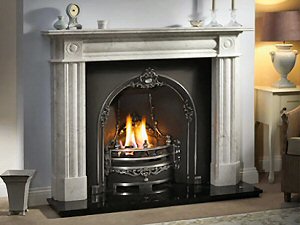
One thing I have learned in recent years, is that a person can only be frugal in any way, when they introduce CHOICE.
Choice has become the enemy of business in recent years, once the individual has a choice, then they can see right through what the business is doing.
A prime example of this is with our energy providers.
I don't care what the big energy providers tell us and lead people to believe, in my opinion they are operating a monopoly.
They take it in turns to increase prices and no matter how many wind turbines are put in place, the price to the customer continues to increase.
In the past 12 months I have tried to limit the use of gas, setting a timer, thermostat, even fitting a brand new boiler in place of the 35 year old back boiler we had. Every year it is the same result, we magically use close to 300 units from mid november to mid december (and every other winter month until March) despite having the heating on for the same amount of time.
From mid October to mid November last year we used 85 units of gas - same as the year before.
The following month, we managed to use just short of 300 units of gas, despite having the same gas use as the month before.
As a result of this mysterious increase in usage, which British gas cannot explain, the monthly cost increases from around £45 per month, up to £130 per month over winter.
I asked British gas for a price per unit of gas, so I could keep tabs on how much we use, three staff couldn't tell me, the fourth could only tell me the formula, which is used to work it out.
Even armed with the formula, multiply number of units by some obscure 0.1233455 (for example) multiply by days in a month, think of a number would be more accurate, this formula only worked out right if I had an old imperial meter, the new metric meters work it out differently!
God only knows how people on direct debits cope with gas bills?
I know of many people who have been paying a set amount each month throughout the year, all well and good, until year end then find they are left with a huge lumpsum to pay, as there has been a mix up, or the meter reading is estimated or the price has changed, etc.
It's a rip off plain and simple.
Changing gas company might save me £25 after masses of paperwork and waiting for four weeks for it to transfer over, not to mention the increase in cost to me because the comparison website's commission has to be paid for (on average £60 per switch over), which is never pointed out to the customer, but has to be found from somewhere!
Gas is not going to get any cheaper as resources run out.
So I have just made arrangements for a friend to come in next week and price up and fit a solid fuel/coal fire.
We never use the gas fire here, too much dry heat, too expensive to run it, we rely on central heating. Falling for the new boiler is more efficient scam, we now see clearly from the money missing from our pocket, that the costs remain the same.
Efficiency is paramount we are told by the powers that be, reduce carbon emmissions, blah, blah, blah...
Efficiency ALWAYS costs more money in my experience.
The only efficiency I am interested in, is to be able to heat my home for a price that doesn't leave us cutting back on our food budget (already thrifty) just to keep warm.
A friend told me they used to have a coal fire, their gas bill PER QUARTER was just £35
They fell for the new boiler/central heating scam, got rid of their coal fire and now are sick of paying out £5 every other day!
Even a cost of £500 to fit a chimney liner and fire surround along with the actual fire, would still pay for itself within one winter.
More importantly, having an alternative source of heating for the house, gives me a CHOICE!
If I don't want to continue paying vast sums to rip off gas companies, I simply pick up a sack of coal from my local farmer (around £8 for a 25kg sack as I write) and away we go.
I shall post pictures and information next week, when hopefully, I'll be sweating cobs in my toasty new house, with around £90 per month more in my pocket.
Pre VAT increase price rises?
By Value hunter on Jan 4, 2011 | In Wondering, Money chat, Bad business, Thrifty shopping | Send feedback »
A fine example of how us customers, stand little or no chance when it comes to "Rip off Britain"
Take a bow Currys, I'd like to see how they explain this one away!
On Christmas Eve, her indoors, purchased a camcorder for my Christmas present.
The price was £349
The camcorder was mis sold - file type did not fit the file type the advisor said that it did, but that's a different topic.
Two days after Christmas, we returned the camcorder to a different local branch, for a replacement.
The price for the camcorder we were returning remained at a regular price of £349.
After looking through the models, we came upon a suitable replacement, on Curry's website, for a regular price of £437.99
This price was the same as the instore regular price, so the exchange was made and we waited for delivery of the new camcorder to the branch to be collected.
Now the part that requires an explanation:
Four days later, still no sign of my new camcorder, I took a look at the Curry's website, which is where the camcorder was ordered in from, to make sure they still had stock of it, prior to my ringing the store up asking if it had arrived (Just incase I was fed the line that there was no stock of it as an excuse for it being delivered late)
To my surprise, the camcorder I was waiting for, priced £437.99 had INCREASED IN PRICE to a whopping £529.99 - An increase of £92
This is BEFORE any VAT increase - the 15 stock items they had in their warehouse before the mystery price increase, if sold, would give Curry's an extra £1380 in profit, at the expense of the customer!
As if this wasn't ripping the customer off enough, check out their "Sale" price on the camcorder I returned.
Normal price Christmas eve, was £349.99
Sale price less than a week later was £349.99 but now with a big red "sale" card advertising that anyone who bought the camcorder would be "Saving £50"
Now correct me if I am wrong, but under Trading standards law, does the higher "before" price have to be charged for 28 days prior to the "sale" price?
It wasn't just the camcorder concerned that was priced this way, a different brand of camcorder was also being advertised at a sale price of £499.99 - exactly the same price as it was not three days earlier.
Disgraceful practice by Currys - clearly misleading their customers as regards "sale" prices at the same time as increasing the price in the example given by more than 18% for no apparent reason other than to increase profit margins!
HETAS coal fire confusion?
By Value hunter on Jan 1, 2011 | In In real life, Common sense, Frugal wars | Send feedback »
HETAS - the official body of solid fuel domestic heating appliances, fuels and services - are recognised by the government for approval of appliances.
HETAS can recommend installers, solid fuel types and chimney sweeps.
Unfortunately, the installation companies and people they recommend, are not always as eager to assist customers.
Of five installers they recommend (in my area), all five failed to either quote, fit, or even ring back myself when presented with a straight forward solid fuel coal fire request or job.
I dropped them an email with the information and asked why they were an official body for the service, yet failing in their respective position, to assist a customer in, to all intents and purposes, is a relatively simple enquiry and possible work.
Their response was lacklustre, referring me to trading standards as HETAS do not deal with the customer and a business/individual that they award a qualification to.
Government states that solid fuel/coal fires, must be "low carbon and efficient" - promoting wood burning appliances as better for the environment.
Trees make wood, but also filter carbon from the atmosphere. Promoting appliances that burn wood and reduce the number of trees on the planet, somewhat contradicts their own argument to reduce carbon emmissions?
As all frugal people are aware of, where confusion is involved in any set up, system or way of doing things, this always results in costing the customer more money!
Any ideas or information you can share, please comment. Hopefully your insight will save people money, time and effort. Thanks